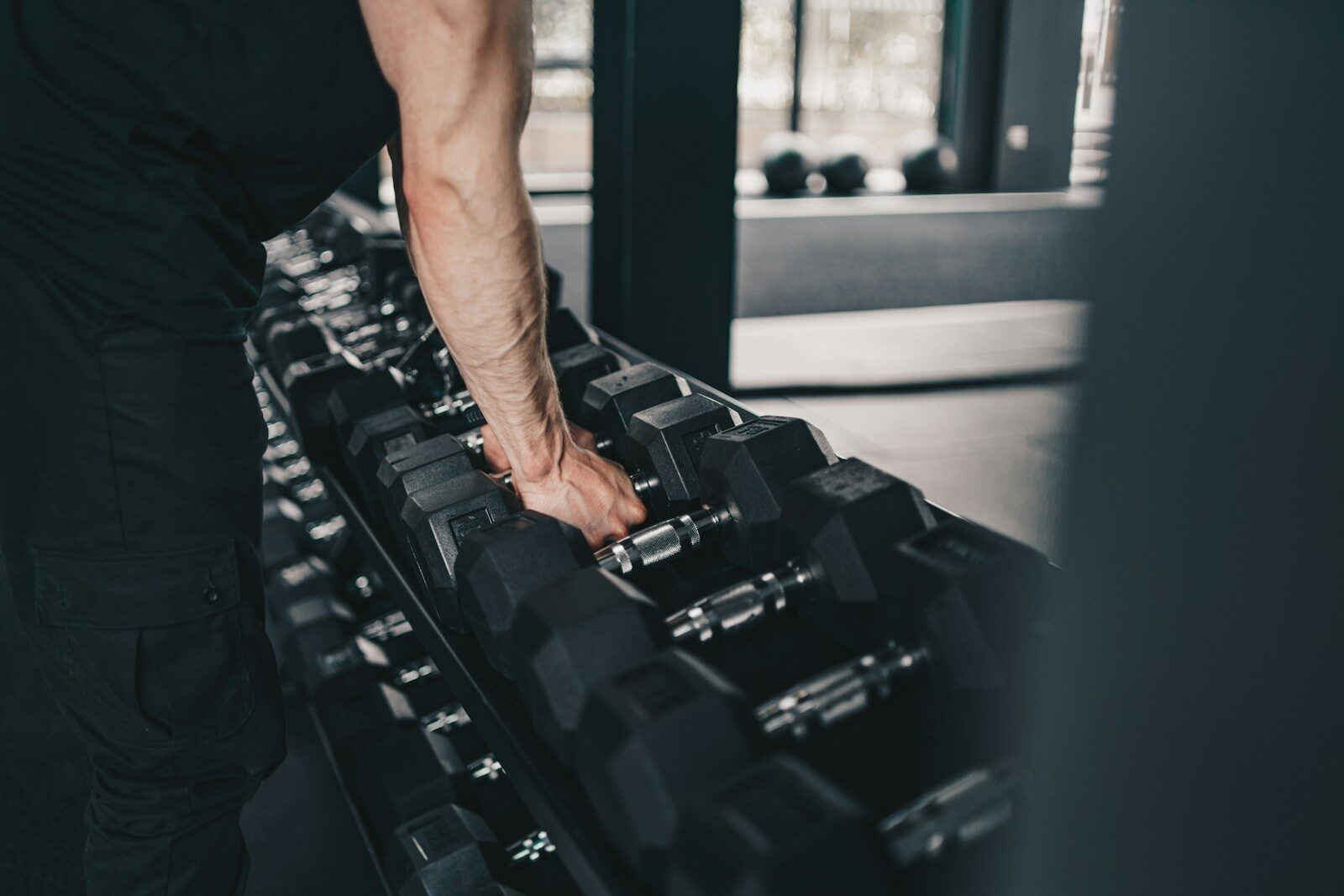
Grip strength is one of those fitness markers that tends to go unnoticed until it becomes a problem. We think about stronger legs, bigger lifts, better cardiovascular fitness and improved flexibility, but the ability to hold, carry and control weight is useful across almost everything we do.
Grip strength is particularly relevant to resistance training. Whether you are holding a dumbbell, carrying a kettlebell, using a barbell or hanging from a pull-up bar, your hands and forearms have to maintain control. A weak grip can sometimes become the limiting factor before the larger muscles you are actually trying to train have reached their full capacity.
That does not mean you need to spend hours squeezing a hand gripper. Everyday exercises can provide plenty of opportunities to develop your grip.
Try Loaded Carries
One of the simplest options is the loaded carry. Hold a pair of dumbbells or kettlebells at your sides and walk for a set distance or period of time. Keep your shoulders relaxed, stand tall and avoid leaning from side to side.
You can gradually increase the weight, distance or duration as you become stronger. The exercise also challenges your posture and core, making it more than just a workout for your hands.
Make Your Existing Exercises Harder
You can also work on grip without adding a separate exercise to your programme. Dead hangs, farmer’s walks, rows and deadlifts all require you to maintain a secure hold.
If your grip regularly gives out before the muscles you are targeting, it may be worth paying attention to it rather than automatically reaching for heavier weights.
Why It Matters Beyond the Gym
Grip strength has a surprisingly practical role in everyday movement. Opening stubborn jars, carrying shopping bags, lifting boxes and holding onto handrails all involve some degree of grip.
For older adults in particular, maintaining strength and the ability to carry objects can be an important part of staying physically capable and independent.
You do not need specialist equipment or an elaborate programme. A few carefully chosen exercises, performed consistently, can turn grip from an afterthought into a useful part of overall fitness.
Photo by Ambitious Studio* | Rick Barrett.